Vaelure Edition Private Bureau & Curated Registry
Independent Private Bureau

An Encounter With The Irrevocable.

Operating entirely outside mass-produced reproduction and commercial saturation. A tightly curated repository of rare historical echoes and singular modern masterworks.

Bureau Mandate

Art is not a retail commodity; it is a permanent encounter.

We operate beyond the noise of infinite digital duplication. Vaelure Edition exists as a private bureau—a cabinet where historical masterworks undergo curatorial recalibration alongside strictly controlled contemporary editions.

Every piece presented shares a single absolute rule: strict scarcity. CC0 historical editions are capped at a global maximum of two physical copies. Contract-bound primary historical masterworks are restricted to singular global allocations.

Once claimed, allocations close permanently.

Curatorial Journal

Editorial Dispatches

Monographs and critical theory examining scarcity, subversion, and psychological permanence in master-tier art practice.

Curatorial Notes // Dispatch I

The Geometry of Rarity: Why True Masterworks Reject the Open Market

When private collectors look at the upper echelons of art history, a curious economic paradox emerges. Mass-produced prints, open editions, and commercial gallery inventories are pushed endlessly through retail channels, treating art like fast-moving consumer goods. Yet, when we examine historical titans—such as Rembrandt’s monumental private-market placements—we see an entirely different set of rules governing value.

True masterworks have never functioned as infinite commodities. In the traditional art market, the illusion of accessibility often dilutes significance. When an image can be reproduced thousands of times across posters, digital prints, and open catalogues, it ceases to be an encounter and becomes mere decoration. History teaches us that enduring weight requires constraint. When Rembrandt painted the paired full-length portraits of Marten Soolmans and Oopjen Coppit—securing a historic private acquisition of €160 million shared between national institutions—or when major museum archives permanently restrict access to primary-source corpuses, value is preserved not through volume, but through absolute scarcity.

This historical reality forms the baseline philosophy behind our registry at Vaelure Edition. By enforcing an uncompromising, ultra-restricted numeric allocation—limiting each curation to an exceptionally small, finite global tier—we remove the work from the speculative retail cycle entirely. There are no open runs or hidden warehouses of extra impressions. Once an edition’s micro-allocation is claimed, the ledger closes permanently. In an era saturated by digital noise and infinite duplication, true permanence belongs only to the irrevocable.
Reference Note: Historical comparative data and baseline study references derived from permanent institutional collections, including holdings at the Rijksmuseum, Amsterdam, and the Metropolitan Museum of Art, New York.
Curatorial Notes // Dispatch II

Beyond the Gaze: The Subversion of Eroticism and Power in Master-Tier Composition

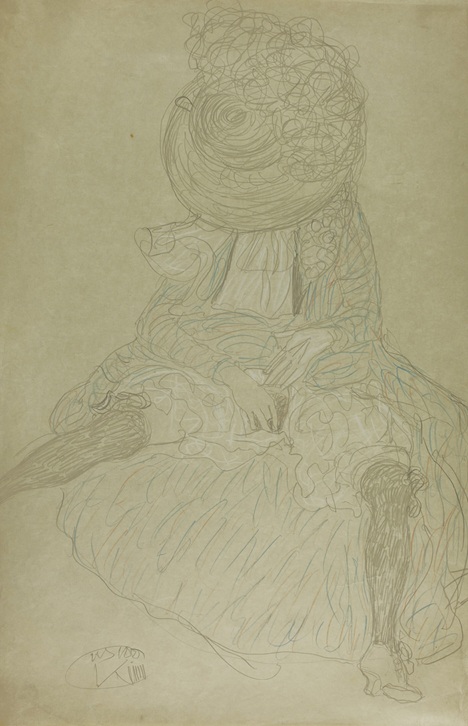
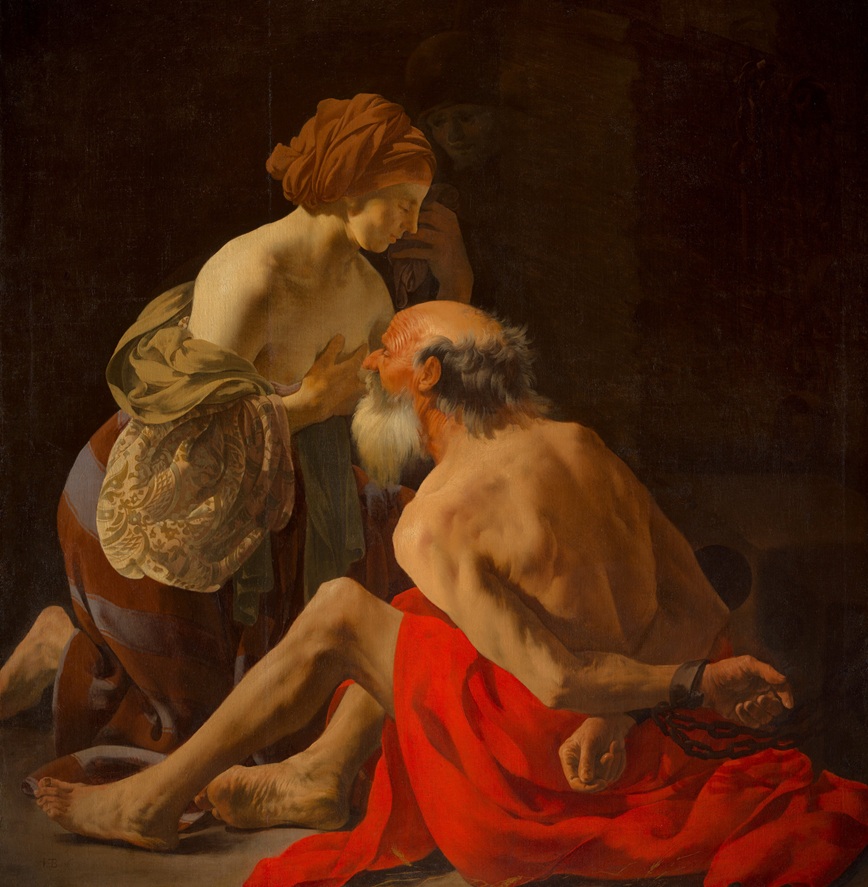
To the casual observer passing through the galleries of classical and modern art, the inclusion of overtly provocative or unvarnished anatomical subjects can often provoke immediate discomfort. Mainstream visual culture is saturated with sanitized aesthetics designed for mass consumption. Yet, when we examine historical masterpieces—such as Hendrick ter Brugghen’s Roman Charity (1622), Gustav Klimt’s unyielding psychological graphite and colored pencil studies, or open-access etchings capturing the unfiltered natural acts of daily life—we encounter a deliberate rejection of polite convention.

Master artists have never used the human form merely to comfort the viewer. They used it to interrogate power, survival, and truth. Consider the historical mechanics of Ter Brugghen’s Roman Charity. On the surface, the visual components present a scene of shocking physical intimacy: a young woman offering her breast to an emaciated, restrained man. To view this purely through a modern, commercial lens is to misread its entire theological and historical architecture. Rooted in the classical legend of Cimon and Pero, the narrative depicts a daughter secretly nursing her imprisoned, starving father to prevent his execution under Roman law. What appears transgressive is, in reality, the ultimate portrait of filial sacrifice, where maternal nurturing is inverted to defy state-enforced death. The body is weaponized not for arousal, but for absolute survival.

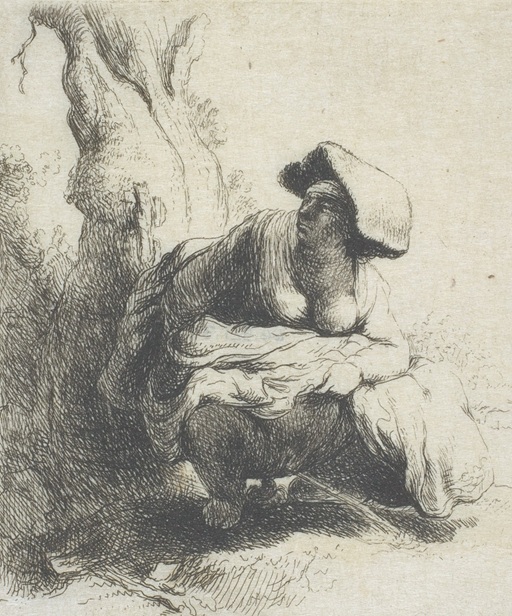
Conversely, when we look into the private graphic portfolios of Klimt or the unpolished realism found in historical etching archives like A Woman Making Water (after Rembrandt and Baron Dominique Vivant Denon), the objective shifts from heroic narrative to psychological honesty. For centuries, institutional art was expected to present an idealized, passive version of humanity. By contrast, masters who captured solitary moments of female autonomy, self-discovery, or raw biological necessity stripped away the theatrical artifice of the salon. In these compositions, the viewer’s immediate gaze is deliberately challenged. What society often attempts to conceal—female desire, physical vulnerability, or bodily reality—is placed front and center, demanding that the viewer confront the human condition without pretense.

At Vaelure Edition, our registry honors this unyielding lineage. True masterworks do not exist to cater to fleeting trends or polite decorative standards. They endure because they capture the unfiltered, irrevocable reality of what it means to inhabit a physical form.

Reference Note: Historical comparative studies and iconographic analyses derived from permanent collections at the Rijksmuseum, Amsterdam, the Metropolitan Museum of Art, New York, and international museum research archives.
Curatorial Notes // Dispatch III

The Witness and the Mirror: Psychological Autopsy in Goya and Van Gogh

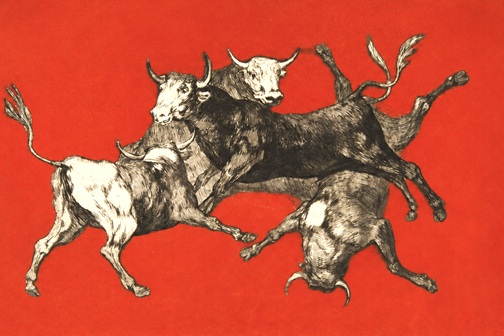
Art history is filled with brilliant technicians—masters who could render light, perspective, and proportion with flawless mathematical precision. Yet, a vast gulf separates a technically brilliant painting from an irrevocable psychological artifact. When we study the harrowing plates of Francisco de Goya’s Los desastres de la guerra (The Disasters of War) or the intense, unblinking gaze of Vincent van Gogh’s self-portraits, we are looking at work born not of commercial calculation, but of absolute psychological necessity.

True masterworks are often records of endurance. Consider Goya’s plates, such as Plate 9 (No quieren / They do not want it). Created in the shadows of the Peninsular War, Goya did not document the conflict as a glorious state-sponsored victory. He recorded it as a silent, devastating witness to human cruelty, societal collapse, and raw survival. Working largely in private, without the expectation of public exhibition during his lifetime, Goya stripped away all romantic military posturing. He presented violence with a stark, journalistic horror that anticipated the psychological weight of modern art by a century.

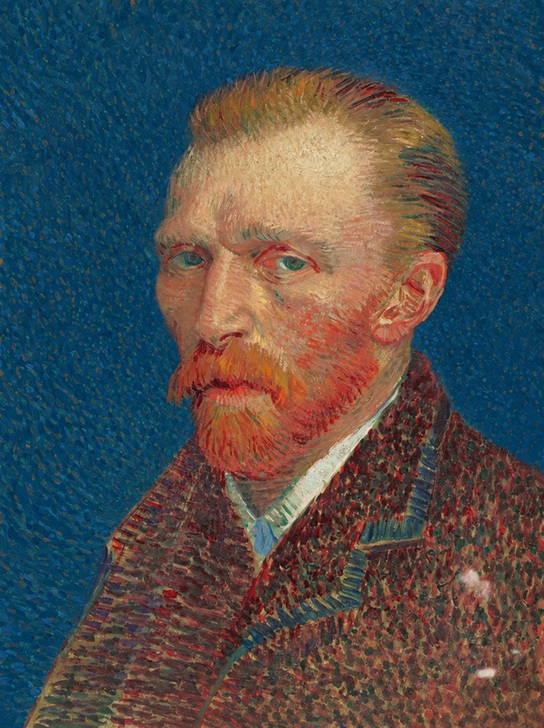
A parallel internal friction defines the portraiture of Vincent van Gogh. When an artist turns the mirror on themselves—as Van Gogh did repeatedly across his life, capturing the hollowed eyes, the strained posture, and the unyielding application of heavy pigment—they are engaging in a rigorous psychological autopsy. In both instances, the artist abandons the role of a polite entertainer. They become a chronicler of unvarnished truth.

In contemporary collection management, this distinction is paramount. A painting that merely matches a room’s color palette is a decorative object. A painting that carries the psychological weight of an artist like Goya or Van Gogh—or a primary-source modern heavy-canvas corpus built under similar isolation—operates as a historical vault. It demands that the viewer stop, look, and reckon with the internal reality of its creation. At Vaelure Edition, our curation reflects this lineage. We curate not for the transient trends of the open market, but for the enduring endurance of the human record.

Reference Note: Historical analyses, print suites, and self-portraiture studies derived from permanent collections at the Metropolitan Museum of Art, New York, the Van Gogh Museum, Amsterdam, and international fine-art archival records.
Alphabetical Index

Curated Masterwork Registry

Strict alphabetical sequence. Catalog entries are strictly capped at global maximums of 1 or 2 copies.

Confidential Channel

Private Mandate & Allocation Dossier Request